Collaborative projects
Restoring migratory fish populations in regulated river systems requires long-term collaboration, research and a step-by-step approach. We work closely with authorities, research institutes, municipalities, fishing rights holders’ associations, NGOs and other stakeholders.
Why does restoring migratory fish populations require collaboration?
Restoring the natural life cycle of migratory fish in regulated river systems is a long-term effort.
No single actor can address the challenge alone. Success requires collaboration between authorities, researchers, owners of water areas, municipalities and other stakeholders.
The development of solutions is based on research, experience and a step-by-step approach.
Restoring migratory fish populations requires a combination of measures, shared goals and long-term commitment.
Research guides the development of solutions
Restoring migratory fish populations is based on scientific research. We monitor the impacts of different measures and participate in research projects that study migratory fish behaviour and reproduction, as well as the effectiveness of different solutions.
We actively participate in and co-fund projects that develop new methods for restoring the natural life cycle of migratory fish and assess the impacts of measures already implemented.
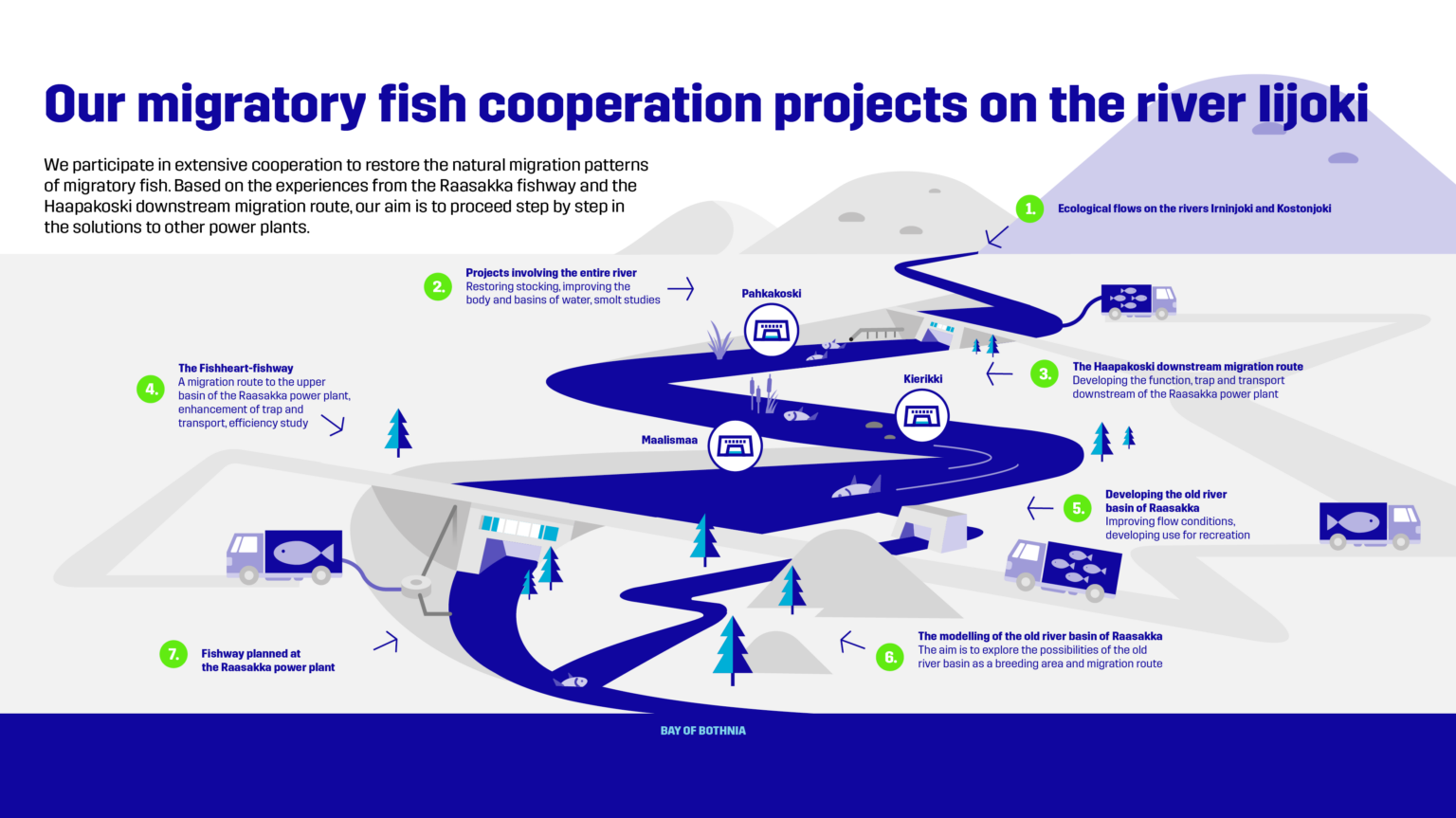

Fishways
Fishways enable fish to migrate past hydropower plants towards their spawning grounds.

Downstream migration
At the Haapakoski hydropower plant, a downstream migration route helps juvenile fish make their way safely towards the sea.

Fish stock management and transferring fish
Fish stocking and fish transfers support the recovery of fish populations and the restoration of their natural life cycle.