Biodiversity
Pohjolan Voima’s operations have various impacts on biodiversity. We are committed to minimising these impacts in accordance with our biodiversity programme. Our focus areas are restoring migratory fish populations and ensuring the sustainability of fuels. With regard to nuclear power, we cooperate with TVO.
Focus on Restoring Migratory Fish Populations and Fuel Sustainability
Our most significant impacts on biodiversity and ecological status are linked to the construction of power plants, fuel procurement and greenhouse gas emissions, as well as impacts on aquatic environments and migratory fish. Indirect impacts also arise through our supply chains and the activities of our partners.
We have set the following long-term targets:
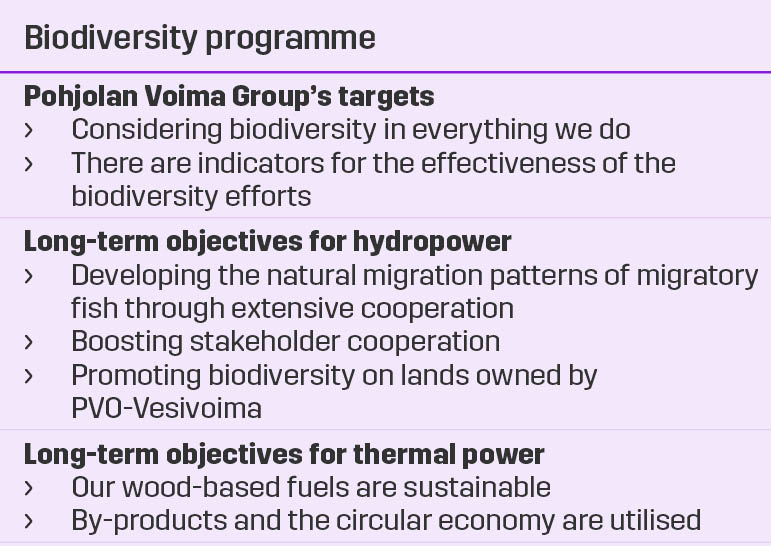
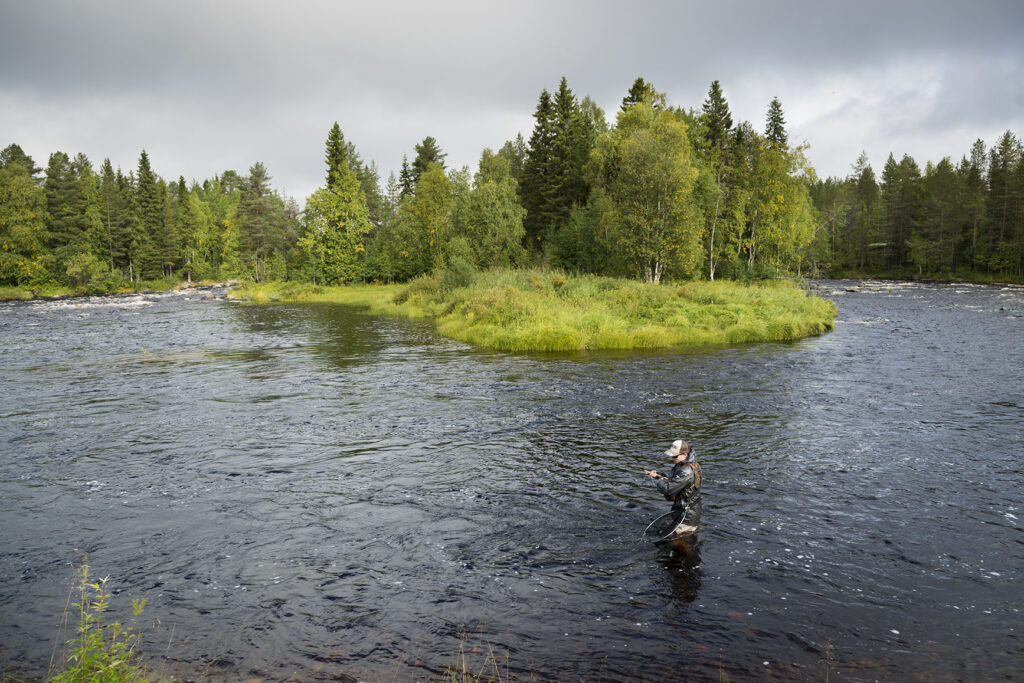
Hydropower: migratory fish and aquatic ecosystems
The most significant negative impacts of hydropower production on biodiversity are related to barriers to fish migration and the ecosystem impacts of water regulation in areas upstream and downstream of power plants.
Water regulation causes fluctuations in water levels and flow rates as the flow of water is converted into energy by directing water from a higher elevation to a lower elevation through the plant’s turbines.
We aim to restore aquatic ecosystems by fulfilling our fisheries obligations, managing water regulation and developing fish passage solutions. Improving water quality is also an important means of enhancing the ecological status of aquatic ecosystems.
Building research knowledge, collaborating on migratory fish and developing water regulation
Together with our stakeholders, we seek solutions to preserve biodiversity. To improve the ecological status of aquatic ecosystems, we participate in collaborative projects in our operating areas. These projects aim, among other things, to increase research knowledge to support measures, plan and implement fish passage solutions, develop water regulation practices and improve water quality. On the Iijoki River, we are involved in implementing a comprehensive shared vision, Iijoki vision for 2030, for the river system, while on the Kemijoki River, we participate in cooperation aimed at restoring migratory fish populations.
In Pudasjärvi, together with our partners, we have created an extensive restoration area of approximately 200 hectares, comprising wetlands and restored peatland suitable for willow grouse, on a former peat production site owned by our hydropower company. In addition, the surrounding forest has been managed with a focus on game habitats and biodiversity to promote its natural characteristics. The area provides birds with resting and nesting habitats.
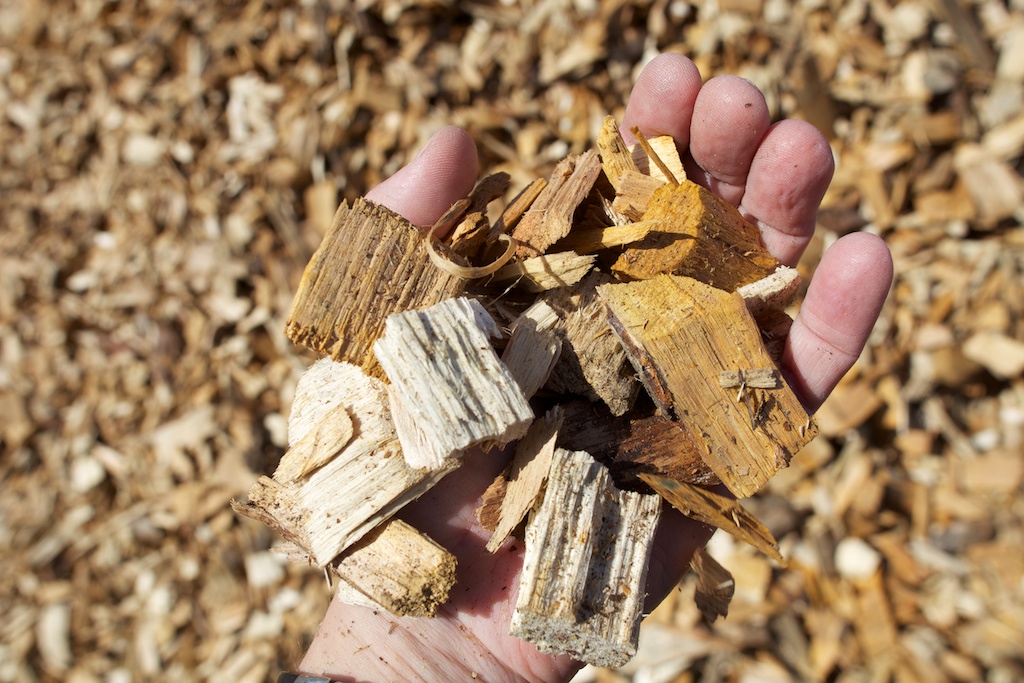
Thermal power: use and transportation of forest energy
The most significant negative impacts of thermal power generation are related to the use of forest-based energy and the transportation of fuels.
Thermal power plants use wood-based fuels, such as by-products from the forest industry. Fuels sourced directly from forests also consist of residues and fractions unsuitable for use by the forest industry. However, the use of forests for commercial forestry has a negative impact on forest biodiversity.
Thermal power companies still use small amounts of peat as fuel, although its use is being systematically reduced. Pohjolan Voima does not own any peat production areas, but its associated company Alholmens Kraft does.
Auditing the sustainability of forest chips
In thermal power generation, we ensure that the fuels we use are sustainably produced. We audit our wood fuel suppliers to assess, for example, whether practices related to forest management and biodiversity comply with the relevant recommendations.
Wood fuel producers are required to verify that the forest chips we use originate from suitable sites. This is verified through site inspections. Each of our production companies conducts at least one audit per year.
In 2025, The Bioenergy Association of Finland and Finnish Energy published a new recommendation on taking biodiversity into account in forest energy procurement. The recommendation has been incorporated into the fuel contract templates used by the Pohjolan Voima Group. We have also reviewed the certification rates of forest fuels.

Biodiversity goals
Our biodiversity programme guides our concrete actions for biodiversity. We are committed to the improvement of biodiversity.

Fish and aquatic environment
We participate in broad cooperation to further natural migration patterns of migratory fish trough extensive cooperation and to develop aquatic environment.